We are currently reviewing resources to be added here. Please check back soon, thank you.

An Overview of Paraguayan Spanish
Native speakers: 7 million.
Paraguayan Spanish is the set of dialects of the Spanish language spoken in Paraguay. In addition, it influences the speech of the Argentine provinces of Misiones, Corrientes, Formosa, and, to a lesser extent, Chaco. Paraguayan Spanish possesses marked characteristics of Spanish previously spoken in northern Spain, because the majority of the first settlers were from Old Castile and the Basque Country.
The Guarani language is co-official with Spanish in Paraguay, and most Paraguayans speak both languages. Guaraní is the home language of more than half the population of Paraguay, with higher proportions of its use in rural areas, and those who speak Spanish at home slightly in the majority in the cities. In addition to the strong influence of Guarani, Paraguayan Spanish is also influenced by River Plate Spanish due to the geographical, historical, and cultural proximity, as well as the sharing of features such as voseo, which is "the use of vos as a second-person singular pronoun." Paraguayan Spanish is notable for its lack of yeismo, meaning that the phonemes /ʎ/ (spelled <ll>) and /ʝ/ (spelled <y>) are distinguished.
The unique features of Paraguayan Spanish developed in part due to Paraguay's early isolation; for example, José Gaspar Rodríguez de Francia, the country's president until 1840, sealed Paraguay's borders. Other experiences with geographic, political, and economic isolation relative to its neighbors allowed Spanish spoken in Paraguay to develop its own unique characteristics, even apart from the wide-ranging influence of Guarani.
Paraguay is, depending on the context, considered part of a region of South America known as the Southern Cone. In its truest definition, the region consists of Chile, Argentina, and Uruguay, but can be expanded to include Paraguay and some regions of Brazil (Paraná, Rio Grande do Sul, Santa Catarina, and São Paulo). Excluding Brazil (where Portuguese is spoken), all the countries in that region have many similarities in vocabulary. Paraguayan Spanish shares many similarities with River Plate Spanish (that is, the variety spoken in Argentina and Uruguay) such as the use of the voseo and various words and phrases.
Source: Wikipedia
Paraguayan Spanish is the set of dialects of the Spanish language spoken in Paraguay. In addition, it influences the speech of the Argentine provinces of Misiones, Corrientes, Formosa, and, to a lesser extent, Chaco. Paraguayan Spanish possesses marked characteristics of Spanish previously spoken in northern Spain, because the majority of the first settlers were from Old Castile and the Basque Country.
The Guarani language is co-official with Spanish in Paraguay, and most Paraguayans speak both languages. Guaraní is the home language of more than half the population of Paraguay, with higher proportions of its use in rural areas, and those who speak Spanish at home slightly in the majority in the cities. In addition to the strong influence of Guarani, Paraguayan Spanish is also influenced by River Plate Spanish due to the geographical, historical, and cultural proximity, as well as the sharing of features such as voseo, which is "the use of vos as a second-person singular pronoun." Paraguayan Spanish is notable for its lack of yeismo, meaning that the phonemes /ʎ/ (spelled <ll>) and /ʝ/ (spelled <y>) are distinguished.
The unique features of Paraguayan Spanish developed in part due to Paraguay's early isolation; for example, José Gaspar Rodríguez de Francia, the country's president until 1840, sealed Paraguay's borders. Other experiences with geographic, political, and economic isolation relative to its neighbors allowed Spanish spoken in Paraguay to develop its own unique characteristics, even apart from the wide-ranging influence of Guarani.
Paraguay is, depending on the context, considered part of a region of South America known as the Southern Cone. In its truest definition, the region consists of Chile, Argentina, and Uruguay, but can be expanded to include Paraguay and some regions of Brazil (Paraná, Rio Grande do Sul, Santa Catarina, and São Paulo). Excluding Brazil (where Portuguese is spoken), all the countries in that region have many similarities in vocabulary. Paraguayan Spanish shares many similarities with River Plate Spanish (that is, the variety spoken in Argentina and Uruguay) such as the use of the voseo and various words and phrases.
- Like all American dialects of Spanish, Paraguayan Spanish has seseo, so that it lacks the distinction between /θ/ and /s/ that is present in Standard European Spanish.
- Syllable-final /r/ is pronounced as [ɹ] (as in American English red) before /l/ or /s/, influenced by a substrate from Native American languages; perla ('pearl') and verso ("verse") are pronounced [ˈpeɹla] and [ˈbeɹso].
- Absence of yeísmo, the historical merger of the phoneme /ʎ/ (spelled <ll>) with /ʝ/ (spelled <y>). For speakers with yeísmo, the verbs cayó 's/he fell' and calló 's/he fell silent' are homophones, both pronounced [kaˈʝo]. (In dialects that lack yeísmo, maintaining the historical distinction, the two words are pronounced respectively [kaˈʝo] and [kaˈʎo].) Yeísmo characterizes the speech of most Spanish-speakers both in Spain and in the Americas.
Source: Wikipedia

Paraguayan Spanish Learning Books
Paraguayan Spanish Language Courses
|
1-on-1 Spanish tutoring at italki
One-on-one language tutoring at italki is hands down the most efficient way to reach language fluency. That's why it is the most popular platform today for learning a language online. You can practice conversational skills under different real-world scenarios with a native speaker tutor of your choice who provides you with undivided attention and customized lessons that cater to your learning needs and interests. Whether you’re at home, at the airport, or at your local park, you have complete access to learning Paraguayan Spanish or any other language you want with a native speaker from any country of your choice. SPECIAL OFFER: Get $10 italki credits by joining via this link. |
|
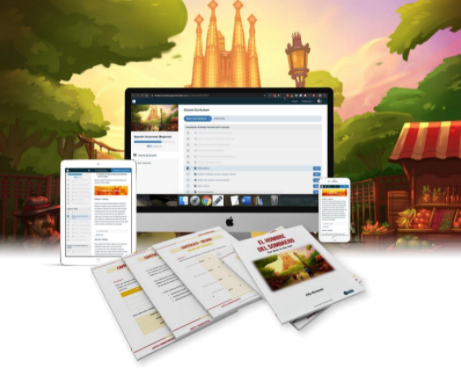
Spanish Uncovered: The World’s First StoryLearning Spanish Home Study Course
This new, science-based language learning method was invented by polyglot language expert Olly Richards, who has authored more than a dozen best-selling language books available in bookstores around the world and on Amazon.com. This was the method he used to learn eight languages, and is the exact same method he has been using to help thousands of students learn Spanish. The course comes in both Castilian and Latin American versions, which means that it works for you whatever variety of Spanish you're learning. Find out more! |

|
Baselang's Real World 1-on-1 Spanish tutoring
This top-rated program offers UNLIMITED 1-on-1 Spanish tutoring where you can take as many online Spanish classes as you want, on a daily basis if you wish, with their professional teachers from all around Latin America for a monthly flat rate. Baselang's classes are specifically tailored to your level, from zero to advanced. Don't miss this amazing opportunity! |
|
Preply
Preply is a global online language learning platform designed to promote faster learning with one-on-one online tutors. It connects language tutors with millions of learners from all over the world. You can choose from thousands of Spanish teachers from any country of your choice available in the platform. Book a lesson with a private Spanish teacher today and start learning. Not entirely happy with your tutor? No worries, Preply offers free tutor replacement till you're 100% satisfied. |
Paraguayan Spanish Learning Podcasts

|
Podcast on Paraguay by Lengalia
Listen to native speakers from Paraguay telling interesting facts about their country, culture and language in Paraguayan Spanish accent. |
Paraguayan Spanish Learning Blogs

|
8 Paraguayan Slang Words for Mastering the Local Lingo
A great blog article on Paraguayan Spanish slang by FluentU. |
|
Paraguayan Spanish Learning Apps
|
Radio Paraguay - On Google Play Radio Paraguay is a great app for listening all the radio stations from Paraguay on your mobile. This app is really easy to use and it's very fast. You can stream your favorite radio channel at any time. |
1-on-1 Paraguayan Spanish Lessons at italki
|
italki is the most flexible and affordable language learning platform that connects students with the most dedicated teachers around the world for 1-on-1 online language tutoring through video chat. At italki, you can choose an experienced Paraguayan Spanish teacher for your personal tutor based on your goals and interests.
Here is a step-by-step instruction to find a native Paraguayan Spanish teacher at italki:
Good luck and enjoy your lesson! |
 |
Home | About | Contact Us | Disclosure | Privacy Policy
This page contains affiliate links. For more information, see our disclosure page.
Copyright © 2024 LearnLatinAmericanSpanish.com
This page contains affiliate links. For more information, see our disclosure page.
Copyright © 2024 LearnLatinAmericanSpanish.com
