
 |
Learn Uruguayan Spanish: A Spanish Course For Uruguay (Audiobook)
Uruguayan Spanish isn't the same as the Spanish spoken in Spain. Certain words and grammar rules differ, slang is different, and of course, there are differences in common foods and culture. This book offers an introductory language course for visitors to Uruguay, preparing you with core Spanish words and phrases, but also with the nuances of Uruguayan Spanish so you can understand the local language and customs. This audiobook offers a complete Uruguayan Spanish course in 10 sections. |

An Overview of Uruguayan Spanish
Native speakers: 3.3 million.
Uruguayan Spanish is the variety of Spanish spoken in Uruguay and by the Uruguayan diaspora. Uruguayan Spanish is recognized as a variety of Rioplatense Spanish.
There is strong influence of Italian and its dialects, particularly Genovese, because of the presence of large Italian communities in the country (for example in Montevideo and Paysandú). The Uruguayan accent differs from the accents of Spain and other Spanish American countries, except for Argentina, due to Italian influence. There are many Italian words incorporated in the language (nona, cucha, fainá ("farinata, chickpea flour crêpe"), chapar, parlar, festichola ("house party"), etc.), as well as words of Italian derivation (for example: mina derived from femmina, or pibe ("child") from pivello).
In the southeastern department of Rocha, as well as along the northern border with Brazil there is some influence of Portuguese, with Portuguese/Spanish code-switching known as Portuñol.
The variety of Spanish used in Montevideo and the whole southern region of the country exhibits use of the voseo form of address, with the pronoun vos instead of the tú form. In other areas of the country, tú is more commonly used than vos. In some places, tú is used, but with the conjugation corresponding to vos, as in: tú tenés, instead of tú tienes (tuteo) or vos tenés (voseo). Tuteo is much more commonly used in Rocha and in some parts of Maldonado.
The formal pronoun usted is used in very formal contexts, such as when speaking to government authorities.
While people in Uruguay and most of Argentina speak the dialect Rioplatense, there are some notable differences in vocabulary between the two countries.
Source: Wikipedia
Uruguayan Spanish is the variety of Spanish spoken in Uruguay and by the Uruguayan diaspora. Uruguayan Spanish is recognized as a variety of Rioplatense Spanish.
There is strong influence of Italian and its dialects, particularly Genovese, because of the presence of large Italian communities in the country (for example in Montevideo and Paysandú). The Uruguayan accent differs from the accents of Spain and other Spanish American countries, except for Argentina, due to Italian influence. There are many Italian words incorporated in the language (nona, cucha, fainá ("farinata, chickpea flour crêpe"), chapar, parlar, festichola ("house party"), etc.), as well as words of Italian derivation (for example: mina derived from femmina, or pibe ("child") from pivello).
In the southeastern department of Rocha, as well as along the northern border with Brazil there is some influence of Portuguese, with Portuguese/Spanish code-switching known as Portuñol.
The variety of Spanish used in Montevideo and the whole southern region of the country exhibits use of the voseo form of address, with the pronoun vos instead of the tú form. In other areas of the country, tú is more commonly used than vos. In some places, tú is used, but with the conjugation corresponding to vos, as in: tú tenés, instead of tú tienes (tuteo) or vos tenés (voseo). Tuteo is much more commonly used in Rocha and in some parts of Maldonado.
The formal pronoun usted is used in very formal contexts, such as when speaking to government authorities.
While people in Uruguay and most of Argentina speak the dialect Rioplatense, there are some notable differences in vocabulary between the two countries.
Source: Wikipedia

Uruguayan Spanish Learning Books
 |
¿Qué es boniato, maestro? Pequeño diccionario ilustrado de uruguayismos para porteños: Contiene como chiquicientas definiciones (Spanish Edition)
This is a rather unusual dictionary. In principle, it is a work designed to help Argentine visitors to understand Uruguayan words and expressions such as boniato (sweet potato), lampazo, champión or caldera. But it's not just that... Its subtitle, Little Illustrated Dictionary of Uruguayan Expressions for Porteños, could well have been 'Little Dictionary for the Careless Person that every River Plate native carries inside', and it would be a good complement. A little dictionary to arm tremendous polemics in bowling gatherings with friends, and it would be a perfect future title. A little dictionary to stir up various sensitivities, without a doubt. |
Uruguayan Spanish Language Courses
|
1-on-1 Spanish tutoring at italki
One-on-one language tutoring at italki is hands down the most efficient way to reach language fluency. That's why it is the most popular platform today for learning a language online. You can practice conversational skills under different real-world scenarios with a native speaker tutor of your choice who provides you with undivided attention and customized lessons that cater to your learning needs and interests. Whether you’re at home, at the airport, or at your local park, you have complete access to learning Uruguayan Spanish or any other language you want with a native speaker from any country of your choice. SPECIAL OFFER: Get $10 italki credits by joining via this link. |
|
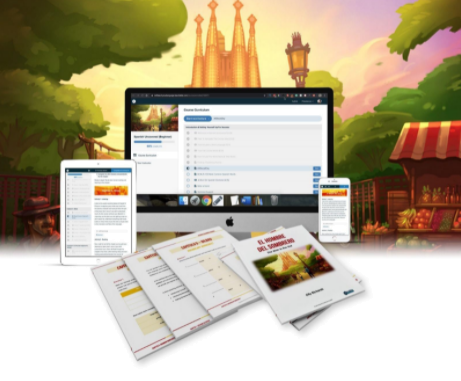
Spanish Uncovered: The World’s First StoryLearning Spanish Home Study Course
This new, science-based language learning method was invented by polyglot language expert Olly Richards, who has authored more than a dozen best-selling language books available in bookstores around the world and on Amazon.com. This was the method he used to learn eight languages, and is the exact same method he has been using to help thousands of students learn Spanish. The course comes in both Castilian and Latin American versions, which means that it works for you whatever variety of Spanish you're learning. Find out more! |

|
Baselang's Real World 1-on-1 Spanish tutoring
This top-rated program offers UNLIMITED 1-on-1 Spanish tutoring where you can take as many online Spanish classes as you want, on a daily basis if you wish, with their professional teachers from all around Latin America for a monthly flat rate. Baselang's classes are specifically tailored to your level, from zero to advanced. Don't miss this amazing opportunity! |
|
Preply
Preply is a global online language learning platform designed to promote faster learning with one-on-one online tutors. It connects language tutors with millions of learners from all over the world. You can choose from thousands of Spanish teachers from any country of your choice available in the platform. Book a lesson with a private Spanish teacher today and start learning. Not entirely happy with your tutor? No worries, Preply offers free tutor replacement till you're 100% satisfied. |
Uruguayan Spanish Learning Podcasts

|
Podcast on Uruguay by Lengalia
Listen to native speakers from Paraguay telling interesting facts about their country, culture and language in Paraguayan Spanish accent. |
Uruguayan Spanish Learning Blogs

|
22 Uruguayan Slang Words That You Probably Don’t Know
An excellent blog article on Uruguayan Spanish slang by Baselang. With Baselang's UNLIMITED 1-on-1 online Spanish tutoring you can take as many online Spanish classes as you want with their professional teachers for a monthly flat rate. Don't miss the opportunity! |

|
10 Uruguayan Spanish Expressions for Visitors to This Latin American Paradise
A great blog article on Uruguayan Spanish slang by FluentU. |
|
Uruguayan Spanish Learning Apps

|
Porteño Spanish - On App Store
Porteño Spanish teaches you the particularities of the language spoken in Argentina and Uruguay. Lunfardo - as the locals call their slang - comes from a mixture of Italian immigration, neighboring Brazilian Portuguese, and underworld elements. Even if you speak Spanish fluently, the app is essential for understanding Porteños. |

|
Diccionario Lunfardo (Lunfardo Dictionary) - On Google Play
This dictionary contains a collection of slang words and expressions typically used in Argentina and Uruguay. |
1-on-1 Uruguayan Spanish Lessons at italki
|
italki is the most flexible and affordable language learning platform that connects students with the most dedicated teachers around the world for 1-on-1 online language tutoring through video chat. At italki, you can choose an experienced Uruguayan Spanish teacher for your personal tutor based on your goals and interests.
Here is a step-by-step instruction to find a native Uruguayan Spanish teacher at italki:
Good luck and enjoy your lesson! |
 |
Home | About | Contact Us | Disclosure | Privacy Policy
This page contains affiliate links. For more information, see our disclosure page.
Copyright © 2024 LearnLatinAmericanSpanish.com
This page contains affiliate links. For more information, see our disclosure page.
Copyright © 2024 LearnLatinAmericanSpanish.com
